
.svg)
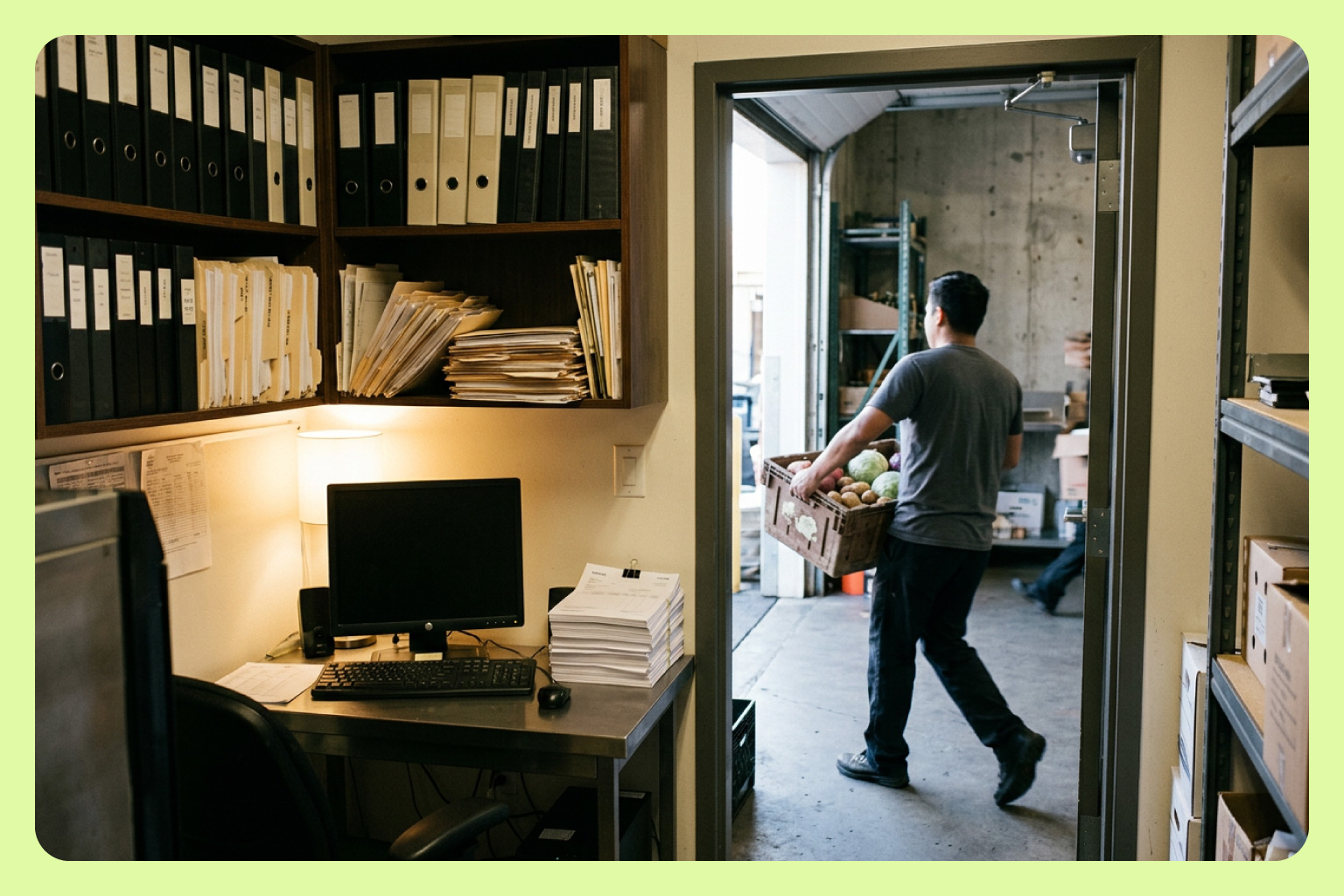
If you manage AP for one or more restaurant businesses as an owner, a bookkeeper, or a financial manager, this is written for you.
Food cost percentage is one of the few variable costs a restaurant operator can actually control. Rent, labor, and utilities are largely fixed. Food is where the margin moves. Controlling it requires knowing how much was spent on each category, with each vendor, at what price per unit - not just a monthly total coded to "food costs."
That detail lives on the line items of every vendor bill. A produce delivery from a broadline distributor carries dairy at one price, meat at another, dry goods at another. Each line feeds the food cost analysis that tells the operator whether the menu is priced correctly, whether a supplier is drifting, and whether a category is running over budget before the month closes.
When AP tools capture that bill as a single total, the category breakdown is gone. Sound Numbers, LLC, a Philadelphia-based financial management firm run by Chris Powell and Mary Smull, managed AP for local restaurants before MakersHub with exactly this problem: a process that produced the right totals but lost the detail that restaurant operators actually need to make purchasing decisions.
What food cost visibility requires
Restaurants live and die on food cost percentage. It is one of the few variable costs operators can control in a business where rent, labor, and utilities are largely fixed. Controlling it requires knowing not just how much was spent on food, but how much was spent on each category, with each vendor, at what price per unit.
Sound Numbers, LLC, a Philadelphia-based financial management firm run by Chris Powell and Mary Smull, manages AP for local restaurants. Before MakersHub, their process relied on manual AP document data entry, managing payments through multiple banking portals, and dealing with the inconsistencies that come when general managers and kitchen staff send documents through different channels.
The result was a process that produced the right totals but lost the category-level detail that restaurant operators need.
Improving security problem and efficiency
Sound Numbers had a second problem on top of the data quality issue: fraud. Paper checks, which were standard in their client workflows, became a significant risk during COVID. Chris and Mary dealt with multiple cases of bank fraud and mail fraud - stolen and altered checks that created financial losses for their clients.
The combination of data quality gaps and payment security risks created an urgent case for a different approach. A tool that automated document capture and replaced paper checks with secure ACH and digital payments solved both problems simultaneously.
"The MakersHub team goes above and beyond to ensure we are comfortable with the system. Their support made the transition seamless and gives us confidence in the product," said Chris Powell, co-founder of Sound Numbers.
How integration mapping changes food cost tracking
The feature that changed food cost visibility for Sound Numbers' restaurant clients is integration mapping: the ability to set specific rules that automatically categorize each line item based on vendor identity or item description.
A bill from a dairy supplier routes each line item to the dairy cost category automatically. A bill from a broadline distributor splits line items across meat, seafood, produce, and dry goods based on the descriptions on the bill, without a person manually categorizing each one.
For restaurants running food cost analysis by category, this is the difference between knowing that food costs were $18,000 last month and knowing that dairy ran 3% over budget, meat was on target, and produce spiked on a specific week when a supplier changed their pricing.
What the results look like for a restaurant bookkeeping firm
Sound Numbers saved at least 25 hours per month after implementing MakersHub. Payments to vendors moved 4x faster, switching from paper checks to secure ACH and digital payments. The firm doubled its client capacity without adding headcount.
That last result is significant for any bookkeeping firm managing restaurant clients: the administrative overhead of AP, which previously scaled with client count, no longer does. Adding a new restaurant client does not add proportional processing time when the line-item extraction, coding, and payment steps are automated.
Mary Smull, co-founder of Sound Numbers, described the staffing shift directly: "The automation allowed us to hire a more skilled employee who could focus on analysis, not data entry."
What restaurant AP needs that generic tools don't deliver
- High-frequency bill volume
Restaurants receive bills daily or multiple times per week from produce suppliers, meat vendors, dairy, dry goods, and beverage distributors. The AP tool needs to handle that cadence without the bookkeeper manually processing each document - Category-level line-item coding
A single bill from a broadline distributor covers multiple food categories. Generic tools code it to "food costs." AP tools built for restaurants code each line to the right category automatically, based on rules set once per vendor. - Secure payments at scale
Paper checks create fraud risk at any volume, but particularly for restaurants where multiple vendors are paid weekly and the payment volume is high. ACH and digital check options with fraud controls are not optional - they are a minimum requirement. - Multi-client management from one platform
A bookkeeping firm managing five restaurant clients cannot operate efficiently by logging into five separate AP systems. A unified platform where each client is a separate workspace, with their own vendor rules and QuickBooks connection, is what scales.
Frequently asked questions
Why is food cost tracking harder than other types of cost tracking for restaurants?
Because details like category, vendor, price per unit lives at the line-item level of vendor bills. A produce bill from a broadline distributor contains dairy, meat, seafood, and dry goods lines on a single document. When AP tools capture that bill as a single total and code it to "food costs," the category breakdown is lost. Recovering it requires going back to the original bills, which is a manual process that rarely happens in practice.
How does integration mapping work for restaurant AP?
Integration mapping in MakersHub lets the bookkeeper or financial manager define rules that automatically categorize line items based on vendor identity or item description. Once the rules are set, every bill from that vendor categorizes automatically, like dairy items to dairy cost, meat to meat cost, and so on, without manual coding on each line. Rules apply to every subsequent bill from that vendor, so the setup happens once and can run on its own.
What is the fraud risk with paper checks for restaurants?
Restaurants that pay vendors by paper check are exposed to check fraud through the mail, like stolen checks or altered payee names. During COVID, this risk increased significantly as mail handling became less predictable. Switching to ACH and digital check payments eliminates the physical check exposure and provides audit trails for every payment. Sound Numbers moved their restaurant clients to MakersHub payments specifically because of the fraud incidents they experienced with paper checks.
Can one bookkeeper use MakersHub to manage AP across multiple restaurant clients?
Yes. Each client operates as a separate workspace with their own QuickBooks connection, vendor list, and coding rules. The bookkeeper manages all clients from a single login, processes bills for each client independently, and the data for each client routes to their own QuickBooks file. The platform does not require switching accounts or re-entering data between clients.
How does AP automation help restaurants control food costs?
By ensuring that line-item data from vendor bills reaches the accounting system accurately and categorized correctly. When every bill from every food vendor is captured at the line-item level and coded to the right category automatically, the food cost reports in QuickBooks reflect actual category-level spend. Operators can see which categories are running over budget, which vendors are drifting on price, and where purchasing decisions need to change - before the month closes.
MakersHub is built for the AP complexity that comes with restaurant and food service businesses. Book a demo to see how it works.