
.svg)
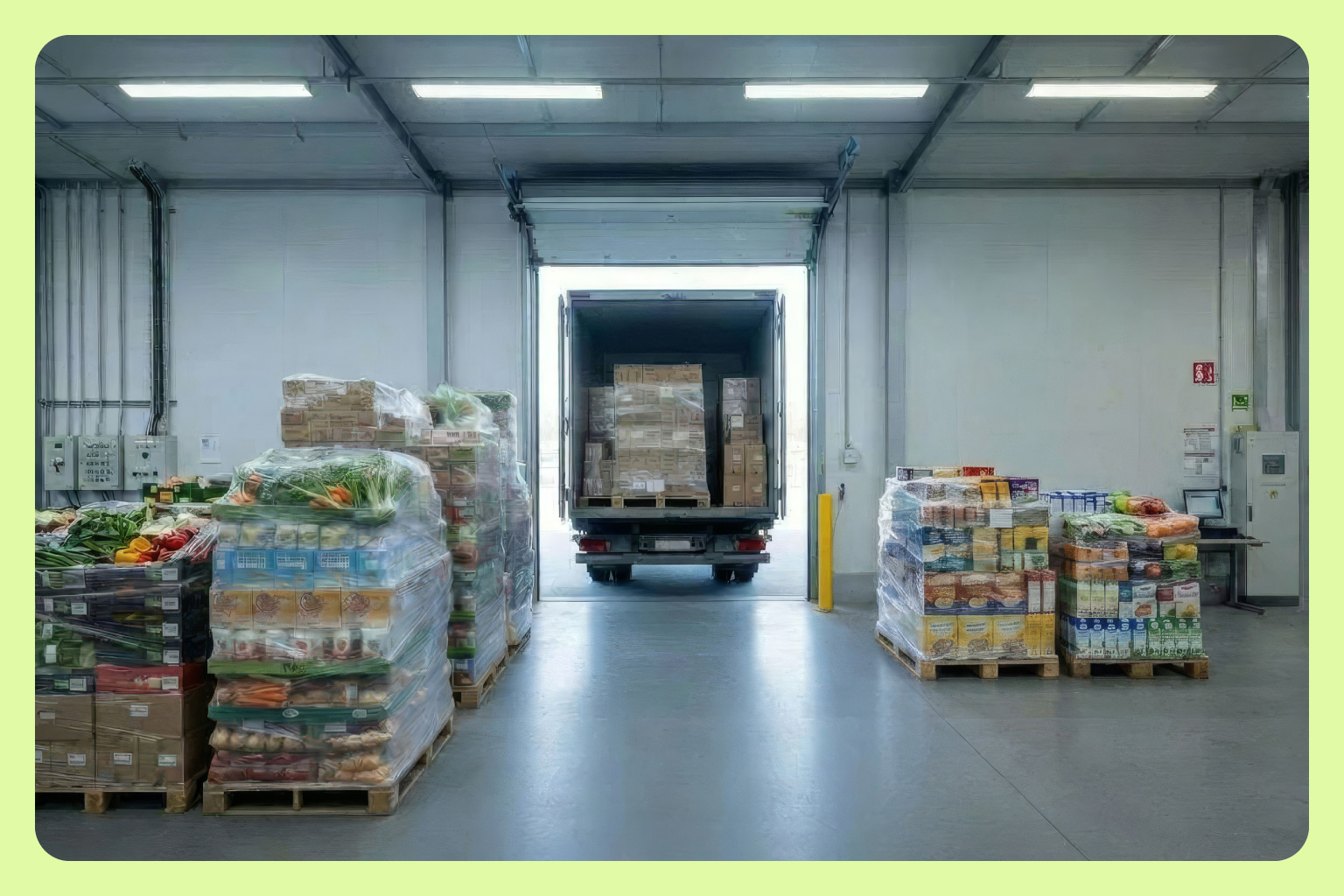
If you run AP for a multi-location grocery or specialty food retailer with thousands of vendor invoices a month, department-level coding requirements, and a vendor ecosystem that ranges from national distributors to local farms handing you a paper invoice at the loading dock, this is written for you.
MakersHub handles AP for specialty grocers processing 4,000 invoices a month across multiple store locations, mapping every line item to a specific department and GL code using signals as granular as a single-letter customer code on the invoice itself.
Here is what I shared on LinkedIn:
What comes to mind when you think of the most operationally complex businesses in the physical economy? Airlines, hospitals, manufacturing facilities?
All reasonable answers. But I would argue the most operationally complex business in the physical economy is the one most of us walked into this week without thinking twice. The humble grocery store.
The number of SKUs is staggering. The vendor ecosystem ranges from national distributors with EDI feeds to local farms that hand you a paper invoice at the loading dock. Pricing changes constantly, sometimes weekly, sometimes by promotion, sometimes because a supplier raised costs and decided to tell you on the next bill. Inventory turns fast, perishables turn faster, and the AP function sits at the intersection of all of it. Does what was ordered match what was received? Does what was ordered and received match what is being billed? Is that spend being allocated correctly across departments and locations? Only then could someone run an informative margin report, and this is a business with notoriously razor thin margins.
We did not set out to build MakersHub for grocery. Our early customers were construction companies, manufacturing businesses and trade services with line-level cost coding problems and multi-stakeholder approvals. But over time we realized that grocers have the most concentrated version of every problem we built the platform to solve. Volume, vendor diversity, line-level coding, multi-location attribution, and a finance team always running lean against operational complexity that does not let up. They have turned out to be a remarkable fit.
Here is one example.
A large, high-end specialty grocer in California with two stores, a third opening next year, and four thousand vendor invoices a month flowing through a finance team that has built something unusual. They run an internally developed database that handles ordering, receiving, and the mapping between purchase data and their accounting system. It is a thoughtfully engineered and carefully maintained piece of operational infrastructure that fits their business better than any off-the-shelf product would.
What they wanted was for the bills to stop being entered by hand. Two receivers per store, every day, opening invoices and typing data. UNFI, KeHE, dozens of small wholesalers, a long tail of handwritten notes from local purveyors who will never email a PDF. Every line item has to map to a department: grocery, produce, bakery, kitchen, deli, supplements, wine, and within the department to a specific GL code that ties back to a specific store location. Sometimes the bill itself tells you the department. Sometimes a receiver puts a stamp on it. Sometimes the only signal is a customer code where the first letter, M for meat, D for deli, quietly carries the routing. This is the work MakersHub is designed to automate. We meet our clients who are operationally serious and infrastructurally idiosyncratic exactly where they are.
Why Does Grocery AP Break Every Horizontal AP Platform?
Grocery AP is a structurally different problem from standard AP. The combination of volume, vendor diversity, line-item complexity, and margin sensitivity creates requirements that horizontal platforms were not designed to address.
Four thousand invoices a month is not unusual for a multi-location specialty grocer. Each invoice can contain dozens or hundreds of line items. Each line item needs to be coded to a department. Each department maps to a different GL code. Each GL code ties back to a specific store location. The platform has to understand all of that before the bill touches the accounting system.
Most AP platforms code at the vendor level. A bill from this vendor goes to this account. That logic fails immediately in grocery because the same vendor supplies products that belong to five different departments. A single delivery from a national distributor can contain items for grocery, produce, supplements, and deli, each coded differently.
What Makes the Vendor Ecosystem in Grocery Uniquely Difficult to Automate?
The vendor ecosystem in a specialty grocery operation spans a range that no other industry matches. At one end: national distributors with structured EDI feeds, standardized invoice formats, and digital delivery. At the other end: a local farm delivering produce with a handwritten note that serves as the invoice.
Between those two extremes sit dozens of small wholesalers, regional distributors, and specialty purveyors, each with their own invoice format, their own pricing logic, and their own relationship with the store. Some send PDFs. Some mail paper. Some hand the receiver a slip at the loading dock that morning.
The AP platform has to read all of them. Not just the clean, structured ones. All of them. Including the handwritten ones. Including the ones where the only routing signal is a single letter in a customer code.
How Does Department-Level Coding Work When the Invoice Doesn't Tell You the Department?
The department assignment for a line item can come from three different places depending on the vendor and the invoice.
Sometimes the bill itself carries the department in a column or field. The platform reads it directly.
Sometimes a receiver stamps the invoice at the dock with a department code before it reaches the AP team. The platform reads the stamp.
Sometimes neither of those exist. The only signal is a customer code assigned by the vendor where the first character encodes the department: M for meat, D for deli, P for produce. The platform has to understand that convention, parse the code, and route the line item accordingly.
MakersHub handles all three scenarios through configurable extraction rules that operate at the line-item level. The rules can be vendor-specific, format-specific, or field-specific. The system learns the patterns over time and applies them automatically.
Can AP Automation Work Alongside a Custom Internal Database?
Yes. This grocer built their own internal database for ordering, receiving, and purchase data mapping because nothing off-the-shelf fit their operation. That system isn't being replaced. It works. It fits the business.
MakersHub connects to internally developed systems the same way it connects to QuickBooks Desktop or any other accounting platform: through a configurable integration layer. The output format, field mapping, and data exchange cadence are built to match what the customer's system expects, not the other way around.
The bill capture and coding workflow runs in MakersHub. The completed, coded, department-assigned bill syncs to the internal database and accounting system in the format they require. The two receivers per store who were spending their days opening invoices and typing data are no longer doing that work.
What Does Margin Visibility Actually Require in Grocery?
Razor thin margins in grocery aren't just a common expression. They're the operating reality that makes every AP error, every miscoded line item, and every missed price variance a direct hit to profitability.
An informative margin report requires clean data at the department level by store location. That data comes from AP. If the AP function is coding bills at the vendor level rather than the line-item level, the margin report is wrong before it's pulled. If the AP function isn't catching price variances between what was ordered, what was received, and what was billed, the margin report is based on costs that haven't been validated.
MakersHub validates at the line level. Every line item is matched against what was ordered and received. Price discrepancies are flagged before the bill is approved. Department and location coding are applied before the data enters the accounting system. The margin report reflects reality because the data underneath it was right the first time.
Frequently Asked Questions
Can AP automation handle handwritten invoices from local grocery vendors?
Yes. MakersHub reads handwritten invoices from local purveyors the same way it reads structured PDFs from national distributors. The document intelligence extracts line items regardless of format and applies the same department-level coding rules.
Why don't most AP platforms work for grocery stores?
Because they code at the vendor level. In grocery, the same vendor delivers products to five different departments on the same invoice. Vendor-level coding gets every one of those lines wrong. You need line-item coding, and most platforms don't do it.
How does MakersHub integrate with a custom internal database rather than standard accounting software?
MakersHub connects to internally developed systems through a configurable integration layer. The output format, field mapping, and exchange cadence match what the customer's system expects. You don't need QuickBooks or NetSuite. You need the platform to produce whatever your system accepts.
What does MakersHub do differently from Ramp or Bill.com for grocery AP?
Ramp and Bill.com apply rules at the vendor level. MakersHub reads at the line-item level. For grocery, where the same vendor invoice contains items for five different departments, vendor-level rules produce the wrong coding on every mixed delivery. MakersHub codes each line to the correct department based on what's on the line, not who sent the bill. See how MakersHub compares to Bill.com for complex AP.
What AP automation works for multi-location specialty grocery with 4,000 invoices a month?
MakersHub. We handle the full workflow: bill capture from any format, line-item extraction, department-level coding by store location, three-way matching against orders and receipts, and integration with the customer's existing systems. We built this for operationally complex food retail.
We built MakersHub for operationally serious businesses that have been told their situation is too specific to automate. If that's your situation, we'd like to hear about it. makershub.com/get-started
Charley Howe, Co-Founder and President, MakersHub