
.svg)
Foster Heating & Cooling Made Its Books Trustworthy Enough to Grow On
A Vancouver Island HVAC contractor, in business since 1928, came under finance-minded ownership with a mandate to scale on numbers it could trust. Its accounts payable process ran on paper. MakersHub replaced the printing, scanning and hand-keying with line-level visibility, reconciled the Canadian sales-tax pennies that QuickBooks Desktop and Foster's largest supplier never agreed on, and did it all without an ERP migration.
About Foster Heating & Cooling
Foster has kept homes and businesses comfortable across Victoria and Vancouver Island since 1928. The work spans residential and commercial HVAC: servicing existing equipment, retrofits, and full new builds. The scale behind it is substantial. Roughly 1,000 new service jobs a month, close to 30 vehicles on the road, more than 30 technicians, and a back-office team of 10, with longer-running commercial construction jobs layered on top.
A few years ago Mitch Allen acquired the business and brought a finance background to the owner's seat. Foster had long been run by technicians-turned-owners, who managed by instinct and experience. Mitch saw the financial data as the thing that should drive growth decisions, and that raised the bar on the accounting.
"We've sought more rigor in our reporting," says Brittany Tam, who joined 18 months ago, took over when the company's longtime accountant retired, and now serves as accounting lead.

The Challenge
Foster's growth plan depended on margin data it could trust, on the big commercial jobs and the smaller service jobs alike. The AP process that fed that data ran on paper, and it was built for record-keeping, not analysis.
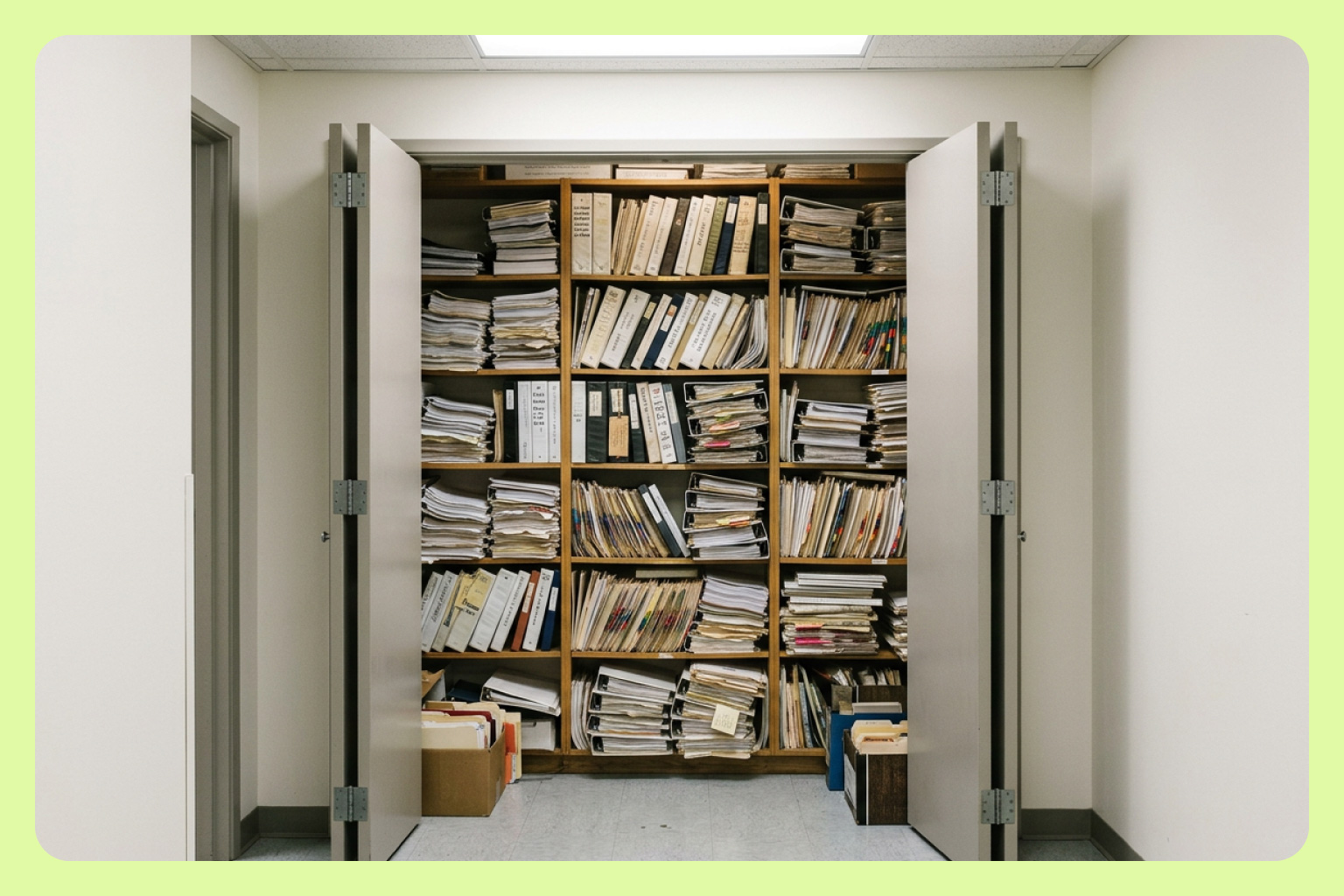
POs were generated on the fly by technicians through a digital form, then matched to bills entirely by hand. Every week, someone spent at least half a day on the matching alone: stamping each bill so project managers had somewhere to mark their approval, sorting the stacks into piles by approver, scanning everything, and hoping the scanner didn't pull two pages at once and lose a bill in the process. When the PMs marked their digital approvals, the team copied those marks back onto the paper by hand. Then they keyed every bill into QuickBooks Desktop, linked the POs, stapled, and filed by vendor.
"We were killing small forests every day."

Brittany Tam
Accounting Lead
The paper cost more than time. It made AP the gatekeeper of the company's cost information, which is the opposite of what a data-driven strategy needs. And it sat on top of a second, quieter problem: Canadian sales tax.
Foster tracks two layers. Federal GST, which the business recovers, and provincial PST, which flows straight into job costs. QuickBooks Desktop calculates tax on the subtotal. Foster's largest supplier calculates it line by line, then sums the rounded amounts. Across 200 to 300 bills a month from that one vendor, the two methods landed a cent or two apart, every time, on each of the two taxes. Someone had to find and true up every difference by hand.
The amounts were small. The stakes were not. When PST is misapplied, it lands directly in job costs, so the books stop reflecting what a job actually cost. On a bill carrying hundreds of thousands of dollars in equipment, a misapplied tax is real margin. And the discrepancies, left alone, stop the books from closing cleanly.
If we can't get those little details dialed in, how can you trust the bigger picture?. It's always a matter of trust. How much can I trust what these reports are telling me?
Brittany Tam
Accounting Lead
Replacing QuickBooks Desktop wasn't the move. The only real alternative was a large, costly ERP migration Foster wasn't ready for, with other priorities ahead of it. The one comparable tool the team evaluated cost more and did less. "We could have hired another full-time person," Brittany notes. The question came down to this: do we hire software, or do we hire people?
What changed
MakersHub gave Foster a modern AP layer on top of the accounting system it already had, and extended the working life of QuickBooks Desktop instead of forcing a migration off it.
"If this is the house we have to live in, we want to make the house livable."
Brittany Tam
Accounting Lead
What that looks like in practice:
- Bills and line items captured digitally. The printing, scanning and hand-keying cycle is gone. So is the risk of a scanner eating a page.
- POs matched and approvals routed in the platform. Project managers approve where the work lives, instead of marking up paper that someone then transcribes by hand.
- GST and PST reconciled automatically. MakersHub reads tax at the line-item level, surfaces every place the supplier's math disagrees with QuickBooks Desktop's subtotal rounding, and trues it up. The penny-by-penny hunt across 200 to 300 monthly bills is handled.
- Consolidated bills synced to QuickBooks Desktop with full line-item detail retained for search, reporting and export, even when the data file is large enough to choke QuickBooks' own import tools.
- Approval rules adjusted as the team changes. Brittany can update workflows quickly as people join, audit the results without it eating her day, and keep an audit trail everyone can see.
- Because the platform handles the data entry, Brittany's team moved from keying numbers to checking them: confirming job coding and catching tax misapplications that matter when a single bill can carry six figures of equipment.
The Results
AP stopped being a backwater and became a source of truth the whole company can act on.
Half a day a week of manual bill matching, eliminated. That is before the printing, scanning and keying that sat on top of it.
1,000
service jobs a month. Costed with current data.
200 to 300
monthly bills from Foster's largest supplier with, every line reconciled to the penny.
The bigger shift is what the numbers now make possible. Project managers see job costs without going through AP. In monthly meetings with the commercial construction team, Brittany pre-loads the cost detail and links straight to the bills in MakersHub, so when a manager asks about a job, she opens the source on the spot instead of digging through folders and emails. On long-running jobs, that means catching a cost overrun while there's still time to do something about it.
We want to know right now, we don't want to know when the job is done and everything is closed out. We want to be able to be agile and adjust.
Brittany Tam
Accounting Lead

What's Next
A new staff accountant came up to speed quickly, and Foster is rolling MakersHub out to its sister company in Duncan, where the existing accountant, self-described as no fan of change, was working in it comfortably within a day.
It does feel like something that's scalable, if this is the house we have to live in, we want to make the house livable.
Foster Heating & Cooling Next
Accounting Lead
Ready to grow on data you can trust?
See how MakersHub modernizes accounts payable on top of QuickBooks Desktop: line-level capture, every tax line reconciled, and real-time job-cost visibility, without an ERP migration.