

Every Bill Line Coded Before It Posts to Your Ledger
MakersHub reads every bill line by line and codes each line to the right job, cost code, entity or department on rules you can see and edit. It syncs both ways with your accounting system, so AP ties out to the GL. When someone leaves, the rules stay.
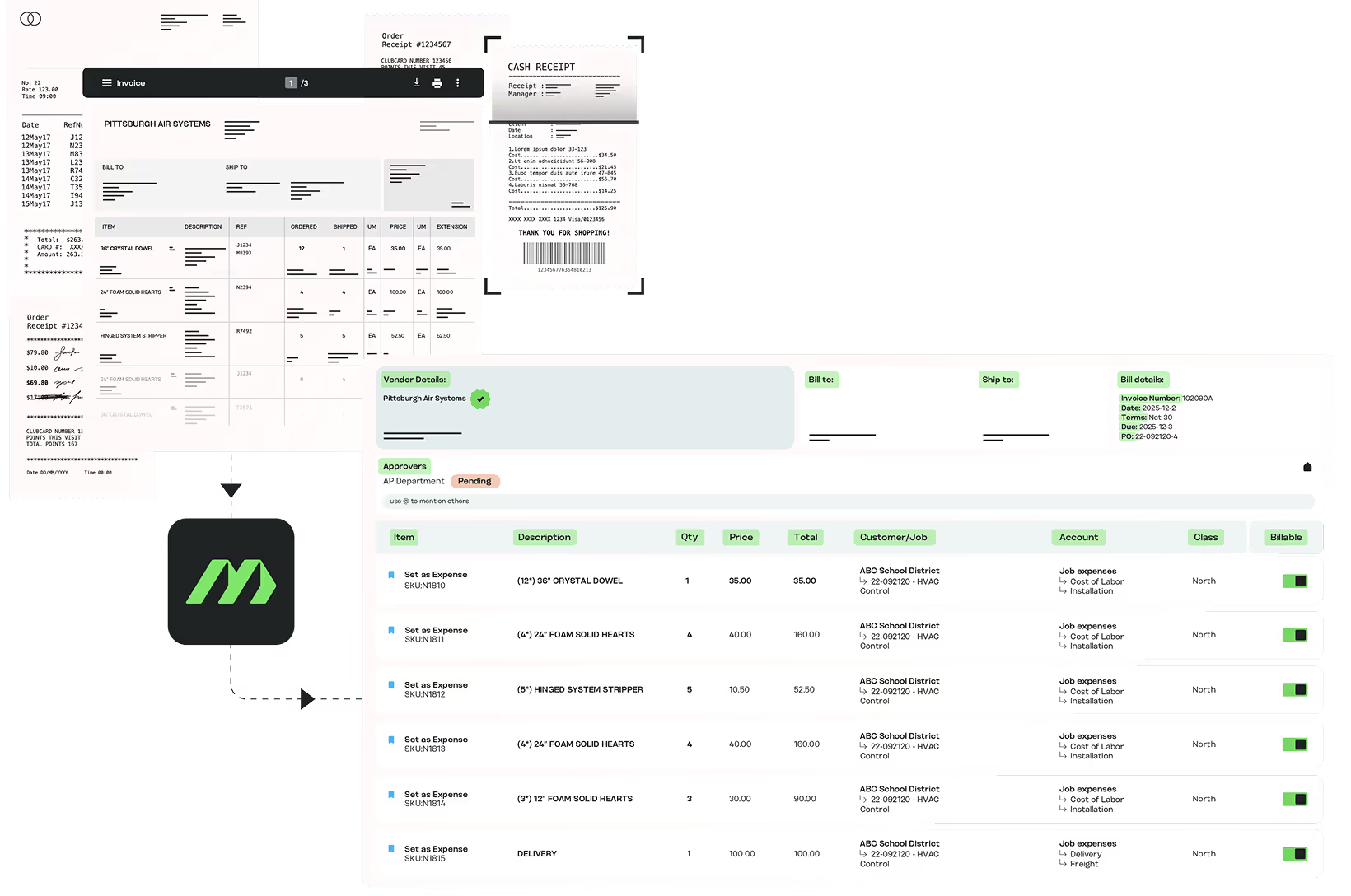
See it code and sync your real bills.

Built for the Way You Run AP

You own month-end
You close the books and are responsible for the numbers. AP is where the close can slip.

You code every bill to jobs or cost centers
Every line gets coded to the categories your books run on.

You inherited a manual process
You're new in the seat, and AP runs on paper approvals and one person's undocumented process.
What’s Slowing Your Close?

Silent sync failures
Bills your current AP tool reports as synced that never post to the general ledger. One construction team found roughly $60,000 in unposted expenses at close.

Manual subledger reconciliation
AP doesn't tie to the GL, so you hunt by hand for the unposted bill or vendor credit.

Coding errors caught in review
Without the line detail, a bill lands on the wrong job or the wrong cost code. You find it at a job-cost review, weeks after it is posted.

Key-person dependency
AP runs on one person's undocumented process. If that person leaves, the process leaves with them.
How Do I Stop AP Sync Errors From Delaying Close?
MakersHub surfaces any line that can't map, with the fix, before the bill posts. It codes every bill at the line level first, and nothing posts until it's validated, so incorrect liabilities don't post.
When a line cannot map to an account, MakersHub surfaces the exception with the correction, instead of failing silently.

Coding you can audit, line by line
Every line codes to your dimensions on rules you set, and shows why it landed there. Accuracy stops depending on who entered the bill.
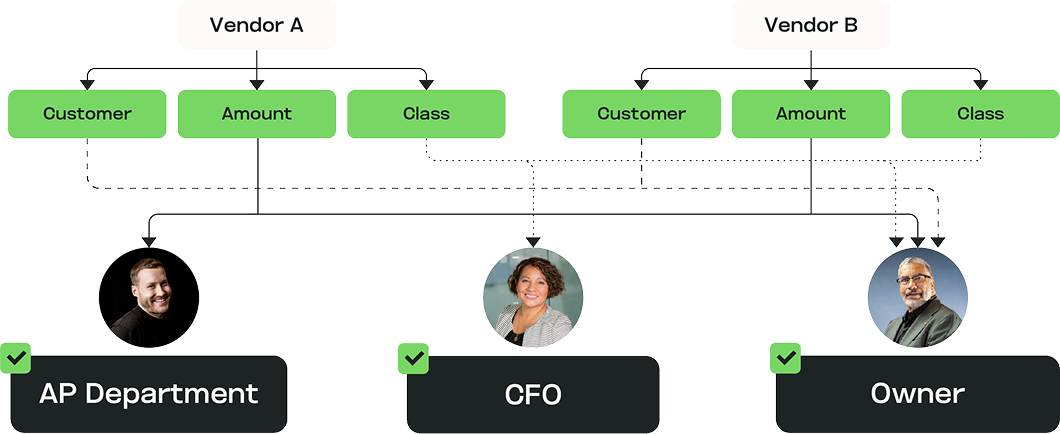
Bill approval and payment authorization are independent steps
You can assign each step to different people for segregation of duties, with every action timestamped.
Outcomes You Can Measure

Close runs on schedule
AP stops being the reason the close runs late.
Bills arrive coded
Bills arrive coded at the line level, ready to post, not re-entered by hand.

A complete audit trail
Every approval and payment authorization is timestamped and searchable, so you can always show who approved what.
Try it on your own supplier bills. Watch MakersHub read it, code every line and sync it to your ledger.
Connects to the Systems You Already Run




AP Teams Who Stopped Checking Every Field
“It extracts everything—invoice numbers, line items, terms, and due dates—all without me lifting a finger”

Charly Green
Controller
Evening Land Vineyards (ag/food)
“The two-way integration with QuickBooks Online works seamlessly. We no longer manually input bills into QBO, saving us multiple hours per month.”

Sue Mariano
Financial Controller
Huntington Paint & Wallpaper (retail)
FAQs
MakersHub surfaces the exception and shows the correction, instead of reporting a clean sync while the bill fails to post. Your AP subledger and general ledger stay reconciled.
You set the rules and can see why each line coded the way it did. The coding is a reasoning engine applied to your dimensions, not an opaque model you have to check line by line.
Routing and coding rules live in the platform, not in a person. Bill approval and payment authorization are separate, timestamped and searchable, so the process and the audit trail survive turnover.
Close on Time, With AP That Ties Out
You stop reconciling the AP subledger to your general ledger by hand.
See it tie out to your ledger. Bring a month of real bills.